Quit Options Trading! If You Are Making This 1 Mistake (The 20K Rule) | Ruchir Gupta
Most people enter the stock market with one dream:
Financial freedom.
But after a few months in option trading, many traders experience something completely different:
- Stress
- Anxiety
- Sleepless nights
- Revenge trading
- Continuous losses
And surprisingly, the biggest reason is not bad luck.
It is one dangerous habit:
Taking oversized risks in options trading without understanding market cycles, emotional control, or position sizing.
In 2026, the Indian futures and options market has become one of the fastest-growing derivative markets in the world. Millions of retail traders are entering weekly expiry trading hoping to make quick money.
But most traders are trapped in a cycle of:
- Overtrading
- Emotional decision-making
- Large position sizes
- Blind option buying
- Social media “tips”
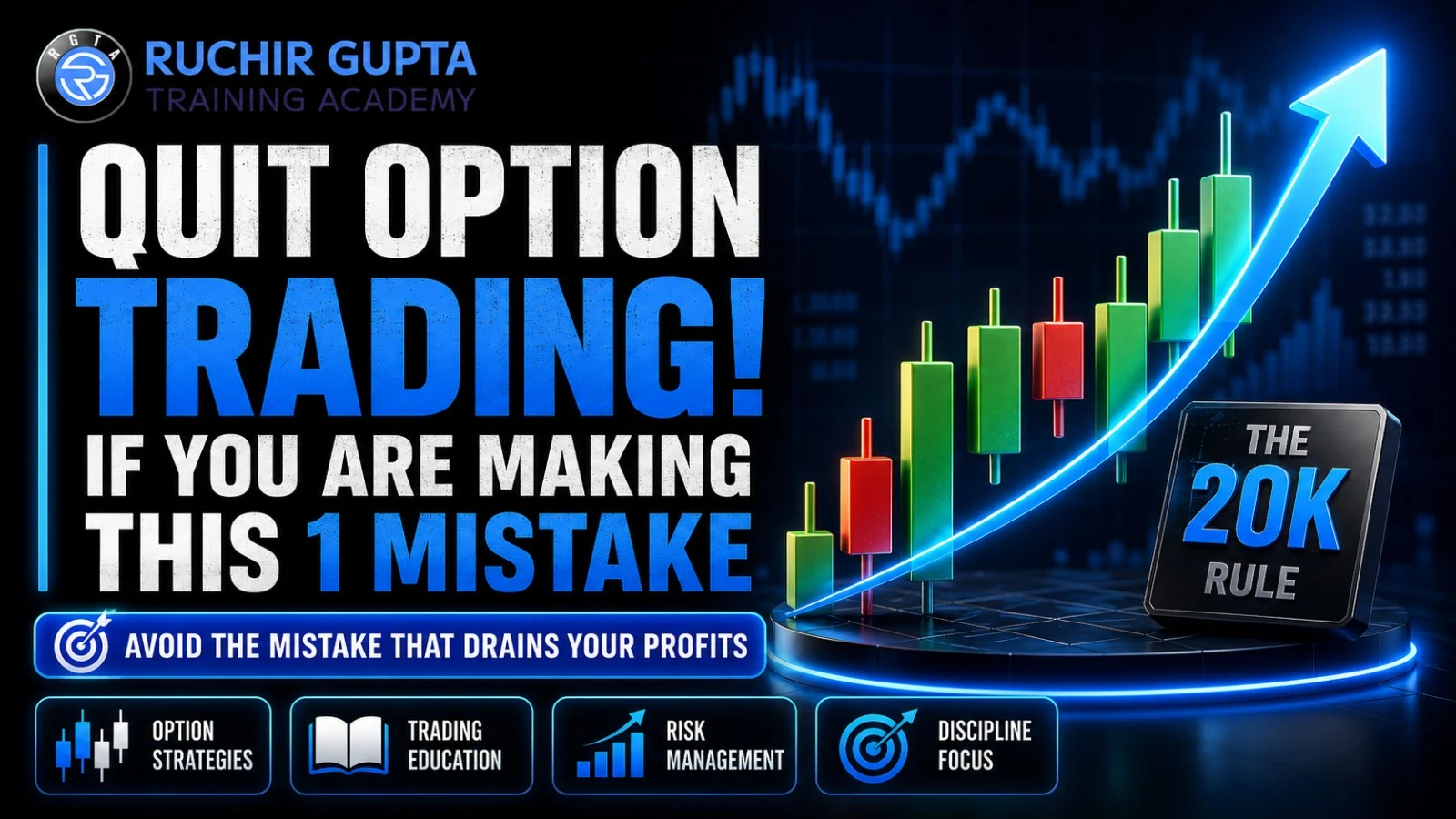
This article is based on the practical trading philosophy shared by Ruchir Gupta and the viral concept known as the 20K Rule — a powerful mindset framework for survival in option trading.
If you are serious about learning:
- option trading
- options trading strategies
- call and put options
- trading futures options
- risk management
- trading psychology
then this guide may completely change how you approach the market.
Quick Answer
The “20K Rule” in option trading means traders should avoid risking large amounts of money in options until they truly understand market cycles, position sizing, and emotional discipline. Many beginners lose money because they overleverage small accounts and try to recover losses aggressively. Limiting risk helps traders survive long enough to become consistently profitable.
What Is Option Trading?
Option Trading Explained
Option trading is a type of derivative trading where traders buy or sell contracts based on the future movement of a stock, index, or asset.
There are two main types of options:
Option Type | Meaning |
Call Option | Profits when market rises |
Put Option | Profits when market falls |
Unlike investing, options trading involves:
- leverage
- time decay
- volatility
- premium pricing
- emotional decision-making
This is why beginners often underestimate the complexity of the futures and options market.
The Real Meaning Behind the 20K Rule
What Is the 20K Rule?
The “20K Rule” is a practical survival rule for options traders.
Its core message is simple:
If you are learning options trading, avoid trading with very large amounts of money.
According to the philosophy explained by Ruchir Gupta Training Academy, beginners should focus on:
- surviving the learning phase
- protecting capital
- controlling emotions
- understanding stock cycles first
instead of trying to become rich overnight.
Why Most Option Traders Fail
1. They Trade Without Understanding Market Cycles
Most beginners buy options randomly without understanding:
stock movement cycles
trend structure
institutional behavior
volatility
Professional traders focus on probability.
Retail traders focus on excitement.
2. They Risk Too Much Capital
One of the biggest mistakes in option trading is oversized position sizing.
Example:
Trader Type | Capital Used | Emotional Pressure |
Disciplined Trader | ₹20,000 | Controlled |
Emotional Trader | ₹2 lakh | Extreme panic |
When traders put huge capital into weekly options:
fear increases
decision quality drops
panic exits happen
This destroys consistency.
3. They Try to Recover Losses Quickly
Many traders think:
“I lost ₹10,000. Let me recover it with one big trade.”
This mindset leads to:
revenge trading
overleveraging
emotional breakdowns
Eventually, accounts get wiped out.
The Dangerous Trap of Overleveraging
Why Big Position Sizes Destroy Traders
Large positions create:
- anxiety
- emotional instability
- panic selling
- irrational decisions
If a trader puts ₹2 lakh into options and sees a sudden 50% drawdown:
- heartbeat increases
- fear dominates
- discipline disappears
Even good setups fail because emotions take control.
This is why the 20K Rule focuses on emotional survival first.
Position Sizing Is More Important Than Prediction
Most traders ask:
- “Will NIFTY go up tomorrow?”
- “What will happen on Monday?”
- “Which option will become multibagger?”
But experienced traders ask:
- “How much should I risk?”
- “What if I am wrong?”
- “Can I survive 10 losing trades?”
That is real professional thinking.
Intraday Obsession Is Destroying Traders
Social media has created unrealistic expectations.
People now believe:
- daily profits are normal
- every trade must work
- trading should generate instant income
But markets do not work like that.
Even experienced traders cannot predict every intraday move.
According to the trading philosophy discussed by Ruchir Gupta:
Bigger trends matter more than random daily predictions.
Separate Equity and Options Accounts
One of the Most Important Trading Rules
If you trade:
equity investing
options trading
futures trading
keep separate accounts.
Why?
Because many traders make this fatal mistake:
Long-term equity investments go down
Trader shifts money into options
Attempts fast recovery
Takes aggressive leverage
Entire account gets destroyed
This creates a dangerous psychological spiral.
Understand Equity Before Trading Options
Why Stock Understanding Matters
If you want success in options trading, first understand:
- how stocks move
- trend cycles
- support and resistance
- momentum behavior
Because option premiums depend on underlying stock movement.
Without understanding stock behavior:
- strike selection becomes random
- timing becomes emotional
- losses become frequent
This is why professional mentors teach market structure first before advanced options trading strategies.
Why Options Are Safer Than Futures
This may sound surprising.
But controlled option buying is often safer than futures trading.
Example
Option Buying
Buy option worth ₹5,000
Maximum loss = ₹5,000
Futures Trading
Margin = ₹2 lakh
Losses can theoretically become unlimited
That is why uncontrolled futures trading becomes extremely dangerous.
Real Risk Management Explained
Risk Management Is Not Just Stop Loss
Real risk management means:
- controlled position sizing
- emotional control
- avoiding overconfidence
- protecting capital
- understanding cycles
No strategy can save a trader who:
- borrows money
- sells assets
- takes extreme leverage
- trades emotionally
Best Options Trading Strategies for Beginners
1. Bull Call Spread
Best for:
moderately bullish markets
controlled risk exposure
Benefits:
lower premium decay impact
defined risk
2. Covered Call Strategy
Useful for long-term investors.
Helps generate additional income from holdings.
3. Protective Put
Acts like insurance during uncertain markets.
4. Iron Condor
Suitable for sideways markets.
Helps traders understand probability-based trading.
How to Trade Options Profitably
Step 1: Focus on Survival First
The first goal in option trading is not becoming rich.
It is staying alive long enough to gain skill.
Step 2: Learn Trading Psychology
Successful traders master:
patience
emotional control
discipline
consistency
before trying advanced strategies.
Step 3: Stop Following Random Tips
Most traders lose because they depend on:
Telegram groups
influencer signals
social media hype
Professional traders depend on:
structured systems
tested strategies
risk control
Step 4: Maintain a Trading Journal
Track:
entry reason
exit reason
emotional state
mistakes
lessons learned
This accelerates improvement dramatically.
Trading Psychology: The Hidden Edge
The market is not just mathematical.
It is emotional.
The biggest enemies in options trading are:
- greed
- fear
- revenge
- ego
- impatience
This is why many technically skilled traders still fail.
Emotional discipline matters more than prediction accuracy.
Why Structured Learning Matters
Most beginners spend years:
- watching random YouTube videos
- changing strategies every week
- chasing indicators
- copying trades blindly
Structured learning creates:
- clarity
- consistency
- discipline
This is why many traders are now joining professional mentorship programs instead of depending only on social media.
Learn Option Trading the Professional Way
The philosophy behind Ruchir Gupta Trading Academy focuses heavily on:
- disciplined trading
- stock cycles
- technical analysis
- risk management
- scanner-based filtering
- emotional control
The academy emphasizes practical market education instead of shortcut-based trading.
Students learn:
- stock market basics
- options trading strategies
- futures and options market behavior
- trading psychology
- capital protection systems
This practical approach is one reason many traders consider it among the best stock market course online programs for serious learners.
Conclusion
The market does not destroy traders overnight.
It happens slowly:
- one emotional trade
- one oversized position
- one revenge trade at a time
The “20K Rule” is ultimately about survival.
Because traders who survive:
- gain experience
- improve psychology
- build consistency
- understand cycles
Stop chasing shortcuts.
Stop trying to recover losses emotionally.
Stop treating options trading like gambling.
Focus instead on:
- discipline
- controlled risk
- structured learning
- emotional balance
- long-term consistency
If you truly want to understand option trading, trading psychology, technical analysis, and professional risk management, joining a structured learning environment can dramatically improve your journey.
Join stock market course by Ruchir Guptha and learn intraday trading, options trading strategies, and technical analysis through practical market-focused mentorship and live training.
People Also Ask
What is option trading in simple words?
Option trading involves buying or selling contracts based on future price movement of stocks or indices.
Why do most option traders lose money?
Most traders lose due to emotional trading, overleveraging, lack of risk management, and poor understanding of market cycles.
What is the 20K Rule in option trading?
The 20K Rule suggests traders should avoid risking large amounts in options while learning and focus on survival first.
Is option trading safer than futures trading?
Controlled option buying has limited risk, while futures trading can create unlimited losses if not managed properly.
FAQs
Can beginners start options trading?
Yes, but beginners should first learn risk management and market structure.
What are call and put options?
Call options benefit from rising prices, while put options benefit from falling prices.
How much money should beginners use in options trading?
Beginners should use small risk capital until they develop consistency and emotional control.
Why is position sizing important?
Position sizing controls emotional pressure and protects traders from major losses.
What is the biggest mistake in option trading?
Overleveraging and revenge trading are among the biggest mistakes.
Can option trading make you rich?
Options can generate profits, but long-term success requires discipline, education, and proper risk management.
Why do weekly options expire worthless?
Time decay rapidly reduces premium value near expiry.
Is intraday option trading risky?
Yes. Intraday options trading is highly volatile and emotionally demanding.
How can I learn options trading professionally?
Learning from structured mentorship and practical market education is the safest path.