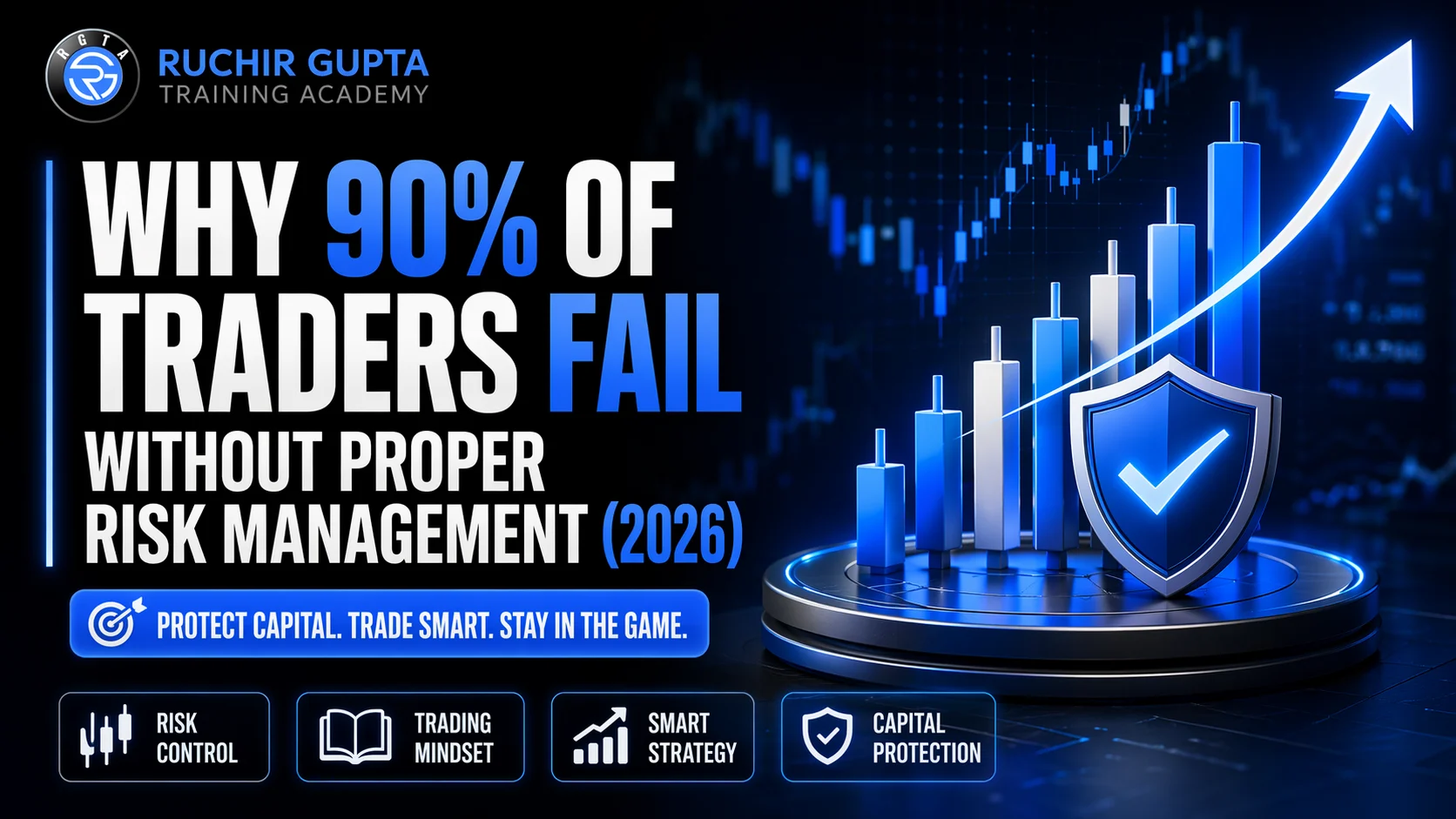
Why 90% of Traders Fail Without Proper Risk Management (2026)
Let’s be brutally honest for a second…
Have you ever entered a trade feeling confident, only to watch it turn into a loss? Then another loss… and another? Suddenly, your capital is gone — not because your strategy was bad, but because you didn’t manage risk properly.
This is exactly why 90% of traders fail.
Here’s the reality:
👉 The stock market doesn’t reward intelligence alone
👉 It rewards discipline — especially risk management
Think of trading like running a business. If you don’t control expenses (losses), your business will collapse — no matter how good your revenue (profits) is.
In this detailed guide, you’ll learn:
- What is risk-management in trading
- Why most traders fail
- Proven strategies used by professionals
- Real data-backed insights (2025–2026)
- How to become part of the top 10%
What is Risk Management in Trading
Risk management in trading is the process of limiting losses while maximizing potential returns.
In simple words:
👉 It’s your protection system in trading
Key Elements of Risk-Management
- Position sizing
- Stop-loss placement
- Risk-reward ratio
- Capital allocation
Golden Rule:
“If you protect your capital, profits will follow.”
Why 90% of Traders Fail
Let’s break a myth — traders don’t fail because of bad strategies.
They fail because of:
- ❌ No risk control
- ❌ Overconfidence
- ❌ Emotional trading
- ❌ Over-leverage
Real Data (India & Global)
- 89% of retail traders lose money in derivatives (SEBI data)
- Average trader loses ₹1–2 lakh annually
- Only 5–10% traders are consistently profitable
👉 The biggest difference?
Risk management in stock market
Risk Management in Stock Market Explained
When you trade without risk-management, you are basically gambling.
But when you apply risk management:
- You control losses
- You survive market volatility
- You grow steadily
Example Table
Scenario | Without Risk-Management | With Risk-Management |
Loss per trade | 10% | 1–2% |
10 losing trades | Account wiped out | Only 10–20% loss |
Emotional impact | High stress | Controlled mindset |
Long-term survival | Low | High |
Financial Risk Management Basics
Financial risk-management is not just for traders — it’s used by:
- Banks
- Hedge funds
- Institutions
Types of Financial Risks
- Market Risk – Price fluctuation
- Liquidity Risk – Unable to exit
- Credit Risk – Counterparty default
- Operational Risk – Execution errors
Understanding these makes you a smarter trader.
Latest Data: Why Traders Lose Money (2025–2026)
Let’s look at updated insights:
Key Statistics
90% traders fail within first 12 months
70% traders don’t use stop loss
60% traders overtrade
Only 1 in 10 traders follows proper risk-management in trading
Top Reasons for Loss
Lack of discipline
High leverage
No trading plan
Ignoring financial risk management
Common Risk-Management Mistakes
Avoid these if you want to survive:
- Trading without stop-loss
- Risking too much per trade
- Averaging losing trades
- Revenge trading
- Ignoring position sizing
👉 These mistakes are responsible for most failures.
The 1% Rule Strategy
This is the backbone of trading.
Rule:
👉 Never risk more than 1% of your capital per trade
Example
Capital | Risk per Trade | 10 Losses |
₹1,00,000 | ₹1,000 | ₹10,000 loss |
You still have 90% capital left.
Risk-Reward Ratio Explained
Ideal Ratio: 1:2 or higher
Risk | Reward |
₹1,000 | ₹2,000 |
Even with 40% accuracy:
👉 You can still make profits
Position Sizing Formula
This is where beginners go wrong.
Formula:
👉 Position Size = Risk ÷ Stop Loss
Example:
Risk = ₹1,000
Stop loss = ₹10
👉 Position size = 100 shares
Importance of Stop Loss
Stop loss is your insurance policy.
Without it:
❌ One trade can destroy your account
With it:
✅ Loss is controlled
Types of Stop Loss
Fixed stop loss
Trailing stop loss
Technical stop loss
Trading Psychology & Risk
Let’s be real — trading is 80% psychology.
Emotional Traps
Fear
Greed
FOMO
Overconfidence
Risk-management helps you:
✔ Stay calm
✔ Follow rules
✔ Avoid emotional decisions
Professional Risk Management Strategies
Successful traders follow rules like:
- Fixed risk per trade
- Portfolio diversification
- Hedging strategies
- Consistent execution
They focus more on protecting capital than making profits
Tools for Risk Management
Here are must-use tools:
- Risk calculators
- Trading journals
- Stop-loss orders
- Portfolio trackers
- Backtesting software
Learning from Experts
If you truly want to succeed, learning from a proven mentor is critical.
One of the most trusted names in India is:
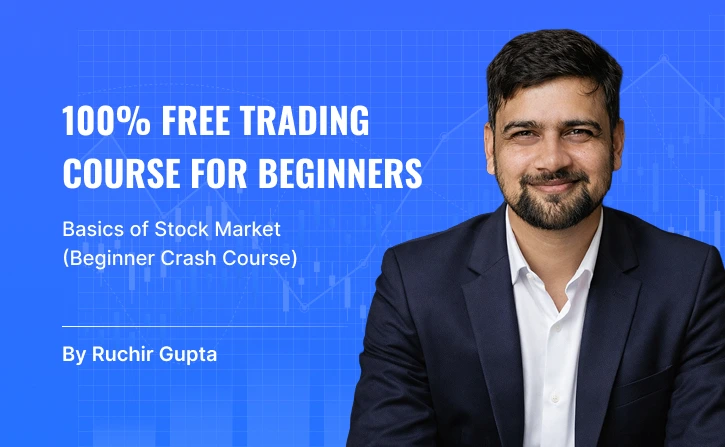
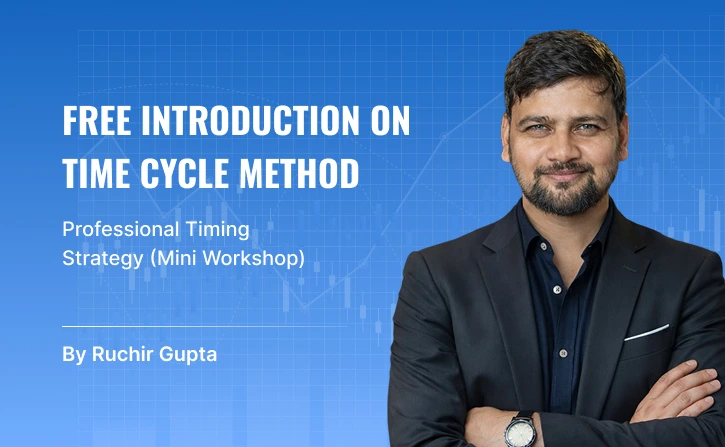
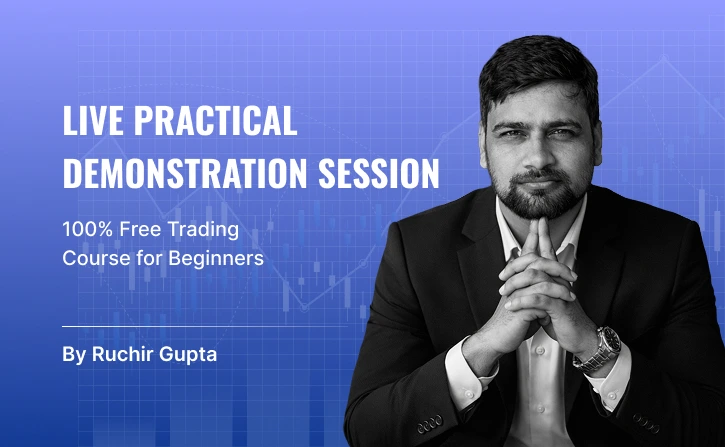
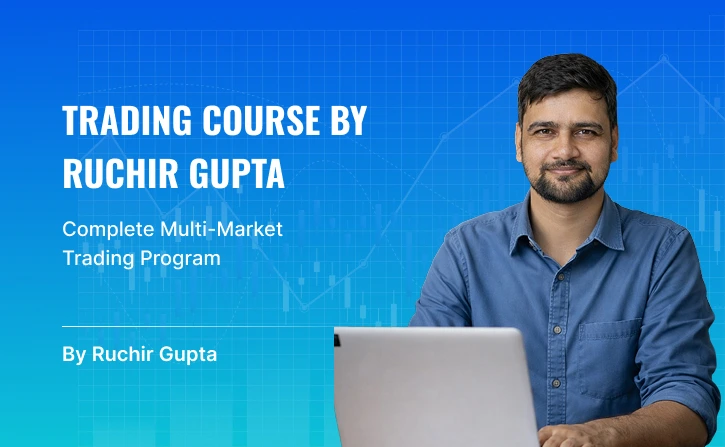
Ruchir Gupta
About Ruchir Gupta
- Leading Stock Market Mentor, Coach & Trading Expert
- 20+ years of experience
- Trained 3,00,000+ traders
- MBA in Finance
- Former Research Analyst
Why His Courses Stand Out
- Structured learning from basics to advanced
- Live market sessions
- Focus on risk-management in trading
- Real-world trading strategies
His platform offers practical training where students learn:
- Technical analysis
- Trading psychology
- Financial risk management
- Capital protection strategies
As mentioned:
Students get:
- Real-time market insights
- Flexible learning
- Global access (23+ countries)
If you want to avoid being part of the 90%:
Learning from experts like him is a game-changer.
Final Conclusion
Here’s the truth no one tells beginners:
You don’t blow accounts because of bad strategies
You blow accounts because of poor risk-management
Success in trading comes down to:
- Discipline
- Consistency
- Risk control
You don’t need:
❌ 100% accuracy
❌ Perfect entries
You need:
✔ Controlled losses
✔ Strong mindset
✔ Proper risk management
Because in trading:
👉 The goal is not to win every trade — but to survive long enough to win big.
Final Thought
If you remember just one thing from this article, let it be this:
“Amateurs focus on profits. Professionals focus on risk.”
Master risk management — and you’ll already be ahead of 90% of traders.
Disclaimer
This article is for educational purposes only. Trading in the stock market involves risk. Always consult a financial advisor before making investment decisions. Past performance does not guarantee future returns.
FAQ'S
What is risk management in trading?
Risk management in trading is the process of controlling losses by using strategies like stop loss, position sizing, and risk-reward ratio.
Why is risk management important in the stock market?
Risk management in stock market helps protect capital, reduce losses, and ensure long-term survival in trading.
What is the best risk percentage per trade?
Most professional traders risk only 1–2% of their total capital per trade.
Can I be profitable without risk management?
No. Without financial risk management, even a good strategy will eventually fail.
What is the ideal risk-reward ratio?
A 1:2 or higher risk-reward ratio is considered ideal for consistent profitability.
How do beginners start risk management in trading?
Start with:
- 1% risk rule
- Use stop-loss
- Follow a trading plan
Is risk management more important than strategy?
Yes. Even the best strategy fails without proper risk management.
How does psychology affect risk management?
Emotions like fear and greed can lead to poor decisions. Risk management keeps trading disciplined.
What tools help in risk management?
Stop-loss orders, trading journals, and position sizing calculators are essential tools.
Where can I learn risk management in trading professionally?
You can learn from expert mentors like Ruchir Gupta through structured online stock market courses.