How to Start Forex Trading in India with Ruchir Gupta's Forex Trading Course (2026 Guide)
Forex Trading has become one of the fastest growing financial markets in the world. Trillions of dollars trade daily in currency markets throughout the world and there are possibilities for traders who know how to read price moves and manage risk.
If you are wondering how to start forex trading in India, the biggest problem is not finding a trading platform but obtaining the appropriate skills before jeopardizing your money. Many newbies lose funds because they trade without knowing market structure, trading psychology or technical analysis.
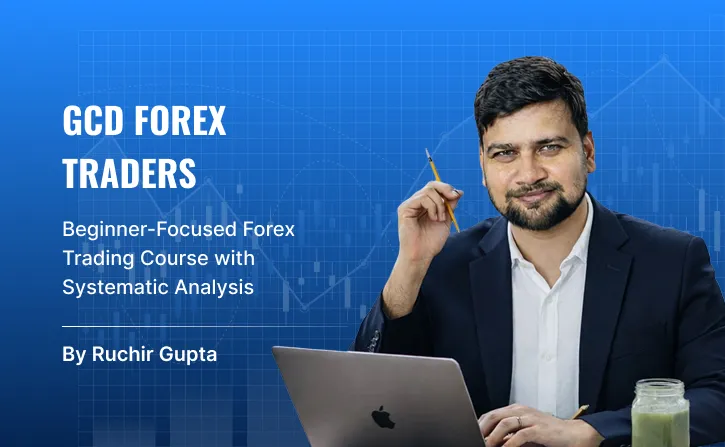
That’s where Ruchir Gupta’s Forex Trading Course comes in. The course is meant to teach the principles of forex trading to beginners and intermediate traders through structured courses, practical methods, and actual market examples.
In this guide, you will know how the forex market works, what you will learn in the course, typical mistakes to avoid, and if this training is right for your trading adventure.
Quick Summary
Topic | Details |
Course | Ruchir Gupta Forex Trading Course |
Best For | Beginners & Intermediate Traders |
Focus | Forex Trading Education |
Learning Mode | Online Training |
Key Topics | Forex Market Structure, Technical Analysis, Risk Management |
Special Modules | Gann Cycle, Forex Scanner, Trading Psychology |
Goal | Build consistent trading skills |
What is Forex Trading?
Forex ( Foreign Exchange ) trading is the buying of one currency and selling of another. Traders try to profit from fluctuations in the exchange rates of various currency pairs.
Some popular currency pairs include:
- EUR/USD
- GBP/USD
- USD/JPY
- AUD/USD
While the stock market closes for the day, the forex market is open 24 hours a day during weekdays, which might be interesting to traders with various schedules.
Benefits of Forex Trading
- High liquidity
- Global market access
- Flexible trading hours
- Low capital requirement (depending on broker)
- Multiple trading opportunities every day
However, success requires education, discipline, and proper risk management.
How to Start Forex Trading in India
If you are looking for how to start forex trading in India, then following a learning path is far better than directly going into live trading.
Step 1: Learn the Basics
Understand:
Currency pairs
Pip values
Leverage
Margin
Lot sizes
Without these concepts, placing trades becomes risky.
Step 2: Study Forex Market Structure
Before entering trades, learn:
Trends
Support and resistance
Market cycles
Breakouts
Reversals
This forms the foundation of technical analysis.
Step 3: Learn Technical Analysis
Develop skills in:
Candlestick patterns
Trend lines
Chart patterns
Indicators
Multi-timeframe analysis
Step 4: Practice on a Demo Account
A demo account helps you:
Test strategies
Build confidence
Understand platform features
Improve discipline
Step 5: Build a Trading Plan
A professional trading plan includes:
Entry rules
Exit rules
Risk percentage
Position sizing
Profit targets
What You'll Learn in Ruchir Gupta's Forex Trading Course
The course follows a practical learning approach instead of focusing only on theory.
Clear Explanation of Forex Market Structure
Students learn:
Trend identification
Price action
Liquidity concepts
Market phases
Institutional movement
Knowledge of these ideas allows traders to make educated decisions, rather than relying on random indicators.
Forex Technical Analysis
The course covers:
Candlestick analysis
Chart patterns
Fibonacci levels
Trendlines
Moving averages
Momentum indicators
These tools help identify potential trading opportunities with greater confidence.
Introduction to Gann Cycle Principles for Currency Markets
One of the unique topics covered is an introduction to Gann Cycle trading.
Students gain an understanding of:
Time cycles
Price cycles
Market rhythm
Trend forecasting concepts
While Gann techniques require practice, they offer an additional perspective on market behavior.
Step-by-Step Guidance on Using a Forex Scanner
A forex scanner helps traders identify active markets quickly.
The course explains:
Scanner setup
Timeframe selection
Currency filtering
Momentum scanning
Trade confirmation
Traders can focus on high-potential opportunities instead of going through dozens of charts manually.
Identification of High-Probability Trade Setups
Successful traders are not in every trade. They wait for quality setups.
Examples include:
Breakout trades
Pullback entries
Trend continuation
Reversal patterns
Momentum trades
Patience generally gives a more uniform result.
Forex Risk Management
Many beginners focus only on profits.
Capital preservation is important to professional traders.
Key topics include:
Position sizing
Risk-reward ratio
Stop-loss placement
Capital preservation
Portfolio management
A good risk management plan helps to prevent emotional decision-making.
Trading Psychology
Emotions influence every trader.
The course discusses:
Fear
Greed
Overtrading
Revenge trading
Discipline
mastering technical analysis is one thing, mastering trading psychology is a different thing.
Common Forex Trader Mistakes and How to Avoid Them
Many traders fail for predictable reasons.
Mistake | Better Approach |
Trading without education | Learn before investing |
No stop-loss | Always manage risk |
Overtrading | Trade only quality setups |
Emotional decisions | Follow a trading plan |
Risking too much | Limit risk per trade |
Avoiding these mistakes improves long-term consistency.
Real-World Example
Picture a first yearer who only trades on social media tips. There’s no structure to their approach, thus they get uneven results.
Now compare that with someone who first learns forex market structure, practices on a demo account, knows risk management, and follows predetermined trading guidelines. They are more likely to make disciplined decisions and protect their cash over time, even if not every deal is profitable.
That’s why education is such a crucial part before you trade with real money.
Expert Tips
Focus on learning before earning. Consistency comes from following a trading plan, not from chasing every market movement.
Additional tips:
- Keep a trading journal.
- Review losing trades objectively.
- Never risk money you cannot afford to lose.
- Avoid copying random online signals.
- Stay updated with major economic news.
Common Beginner Mistakes in Backtesting
Avoid these pitfalls to get reliable results:
- Changing rules during testing.
- Ignoring transaction costs and slippage.
- Using only a small sample size.
- Over-optimizing parameters to fit historical data.
- Testing only during bullish markets.
- Ignoring risk-adjusted returns.
- Assuming past performance guarantees future profits.
A robust strategy should perform reasonably well across different market cycles rather than delivering perfect historical results.
What Students Say About Ruchir Gupta's Forex Trading Course
★★★★★ “I’ve been learning with Ruchir Gupta Training Academy for a long time, and the experience has been consistently insightful. Ruchir Gupta’s 20+ years of trading experience are reflected in his practical teaching style, disciplined strategies, and easy-to-understand explanations. The course has helped me build confidence in analyzing the forex market and making informed trading decisions.”
— Amit Verma
★★★★★ “The biggest strength of Ruchir Gupta Training Academy is its transparency. The training doesn’t promise unrealistic returns. Instead, it teaches risk management, trading psychology, discipline, and practical market strategies. Ruchir Gupta’s real-world experience makes every session meaningful and applicable to live market conditions.”
— Vikram Desai
Warning
To make a profit while trading, novices should first learn how to make use of the concepts of economy markets, grasp the structure of the forex market, try out a demo account and formulate a trading strategy.
Pros and Cons of the Course
Pros | Cons |
Beginner-friendly structure | Requires consistent practice |
Covers technical analysis | No course guarantees profits |
Includes risk management | Learning curve for advanced concepts |
Practical examples | Success depends on individual discipline |
Covers trading psychology | Continuous market learning is essential |
Key Takeaways
- Forex trading education is required before investment.
- Understanding forex market structure helps decision making.
- Risk management is essential for long-term success.
- Trading psychology affects consistency.
- A forex scanner can help identify quality opportunities.
- Gann Cycle concepts add another layer of market analysis.
- High-probability trade setups often outperform frequent trading.
- Practicing on a demo account builds confidence.
- Following a structured course can shorten the learning curve.
- Continuous learning is essential in changing market conditions.
Conclusion
If you are looking to know how to start forex trading in India then remember that successful trading starts with education, discipline, and regular practice.. Structured learning path helps you grasp the forex market structure, construct efficient forex trading methods, increase forex risk management and develop confidence to spot high probability trade settings.
Ruchir Gupta’s Forex Trading Course is aimed to teach practical information to the learners with themes like technical analysis, trading psychology, Gann Cycle foundations and use of forex scanners. No training can guarantee profits, but following a curriculum can help you avoid the usual mistakes of beginners and make better trading selections.
Learn, practice a lot, manage your risk prudently, and focus on developing your skills over the long term. The more disciplined you are with your approach the better equipped you are to handle the volatile world of forex trading.
FAQs
How to start Forex Trading in India as a beginner?
To trade with money, they need to have a basic understanding of the currency markets, the forex market structure, practice on a demo account, and create a trading plan. A structured course can also help to establish good foundations.
Forex trading is legal in India ?
Forex trading is regulated in India. Before dealing in the market, traders should be aware of the applicable rules and regulations, and they should also use the platforms that are authorized and compliant with the Indian laws.
What is the Forex Trading Course lessons by Ruchir Gupta?
The course includes an introduction to forex market structure, technical analysis, Gann Cycle fundamentals, how to use forex scanners, risk management, trading psychology, and high-probability forex trade setups to improve knowledge of the market.
What is a Forex Scanner?
A forex scanner is a tool designed to help traders pinpoint a set of conditions that a currency pair must comply with, which makes it simpler to discover a trading opportunity that will fit without having to manually analyze each chart.
What are the reasons for using risk management in Forex trading?
By employing risk management strategies such as managing position size, using stop-loss orders, and adhering to disciplined trading, traders can help mitigate the effects of their losses.
How to identify high-probability trade setups?
They are trading opportunities that satisfy several technical and market requirements which makes them more likely to be successful. They typically include trend confirmation, support and resistance, and price action signals.
What is Gann Cycle trading?
The Gann Cycle trading approach is a form of market analysis which looks at the interaction between price and time to spot possible turning points. It is often used in combination with other technical analysis techniques.
How to learn to trade the foreign exchange market on the web for beginners?
Yes. Beginners opt for online courses due to their structured learning, practical examples, and the ability to learn at their own speed.
What is the time required to learn to trade the forex market?
Learning time is different from person to person. Most novice traders will need a couple of months of steady practice and discipline before they’re confident enough to trade in the real markets.
Can Forex Trading Course by Ruchir Gupta be used by the people who are already expert in forex trading?
Intermediate traders can also enhance their market analysis skills, gain better knowledge of risk management, and delve deeper into market principles including the Gann Cycle and structured trade planning.