India boasts a large number of traders, each with their own techniques. There are many top traders in India who have different techniques of trading.
The stock market can be a profitable venture if you are willing to do the necessary research, be patient, and take the necessary risks. Many people tend to get involved in short-term gains, while seasoned investors concentrate on making longer-term investments with informed choices.
India has nurtured a number of successful market personalities, with different investment philosophies. There are, however, great risks associated with stock market trading. SEBI’s report in August 2026 revealed that 87.7% of the individual equity derivatives traders suffered losses in FY26.
Best Traders in India
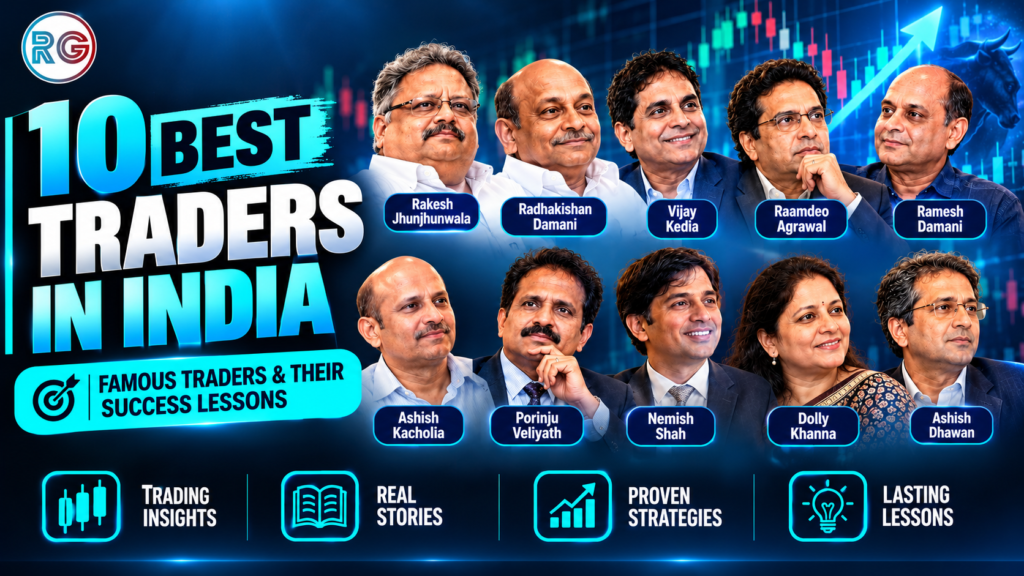
A few of the most popular market investors in India are Rakesh Jhunjhunwala, Radhakishan Damani, Vijay Kedia, Raamdeo Agrawal, Ramesh Damani, Ashish Kacholia, Porinju Veliyath, Nemish Shah, Dolly Khanna, and Ashish Dhawan.
These are people with their own unique approach to investing and market experience. Many are called traders, but many are more concerned with the long-term game than with short-term trading.
This list is a subjective ranking of the best names and not intended to be complete.
| No. | Name | Known for | Key lesson |
| 1 | Rakesh Jhunjhunwala | Long-term equity investing | Research and conviction |
| 2 | Radhakishan Damani | DMart and value-oriented investing | Patience and business quality |
| 3 | Vijay Kedia | Growth investing | Research and patience |
| 4 | Raamdeo Agrawal | Fundamental analysis | Quality and valuation |
| 5 | Ramesh Damani | Equity investing | Understand the business |
| 6 | Ashish Kacholia | Emerging companies | Research smaller businesses |
| 7 | Porinju Veliyath | Contrarian investing | Question market sentiment |
| 8 | Nemish Shah | Fundamental investing | Long-term analysis |
| 9 | Dolly Khanna | Equity investing | Study fundamentals |
| 10 | Ashish Dhawan | Institutional investing | Think systematically |
Rakesh Jhunjhunwala: Conviction Needs Research
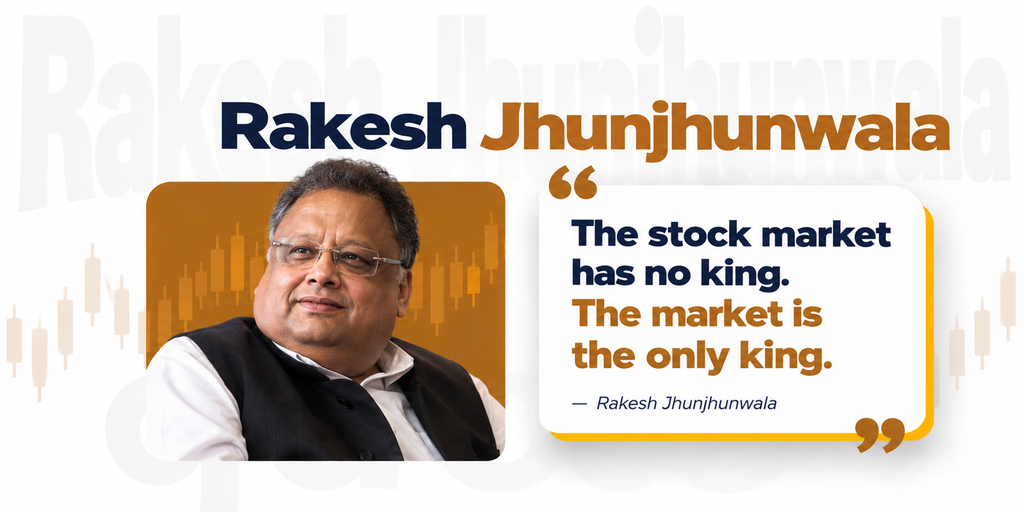
Rakesh Jhunjhunwala is one of India’s most renowned investors. He has made long-term investments in companies like Titan by investing in high growth businesses.
Takeaways
- Invest in fundamentally sound companies.
- Have patience.
- Don’t invest out of emotion.
Tip for Beginners: Do your research on how well the company is performing financially.
Radhakishan Damani: Patience in the Face of Noise in the Market
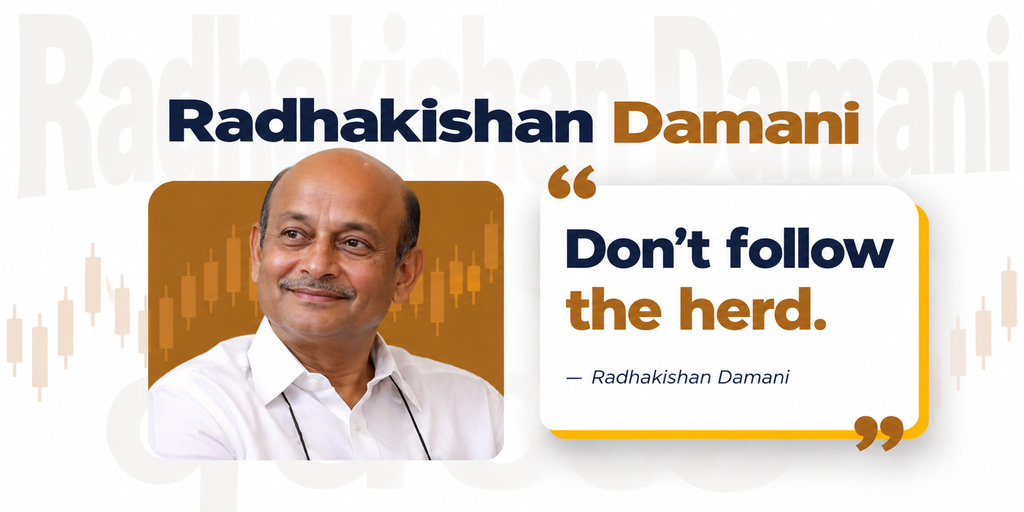
Radhakishan Damani, founder of DMart, is very focused on value investing and follows a highly systematic approach while investing. He focuses on quality stocks at reasonable valuations to build wealth in the long term.
Takeaways
- Business fundamentals are key.
- No unnecessary trading.
- Long term focus.
Tip for Beginners: An cheap stock may not be an undervalued one.
Vijay Kedia: It’s Time to Rise, Not to Hype
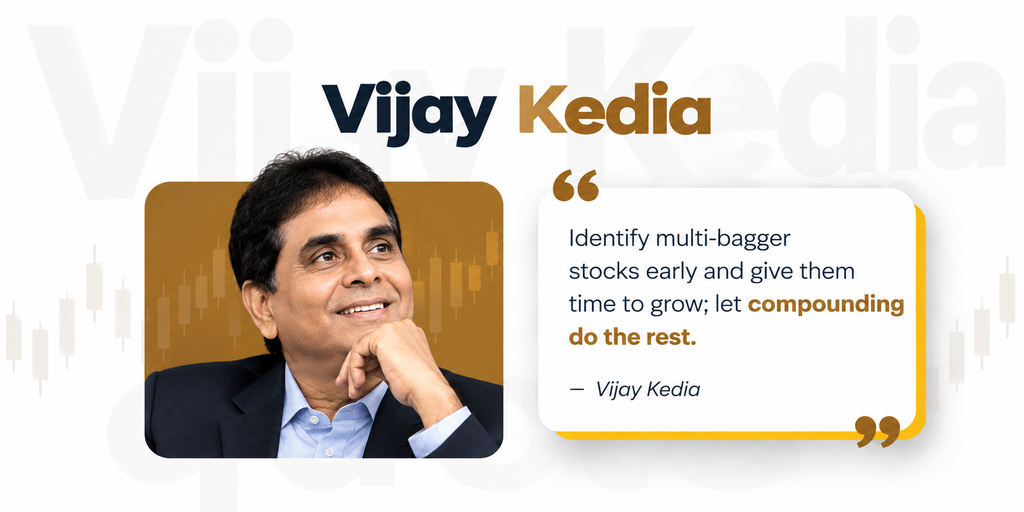
Vijay Kedia is one of the most popular traders of India who is well renowned for picking up the best small and mid-cap companies. He has an investment theory called SMILE where he invests in companies that have good management and great growth avenues.
Takeaways
- Identify new businesses.
- Look for good quality management.
- Long term investing.
Tip for Beginners: Look for earnings growth and financial strength in small cap companies..
Raamdeo Agrawal: Make Research a Habit
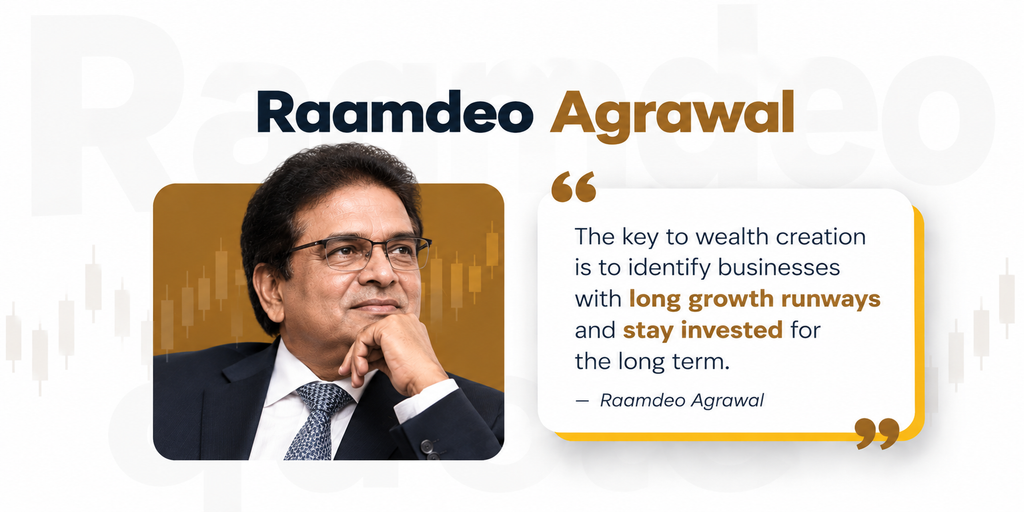
Raamdeo Agrawal, one of the founders of Motilal Oswal, uses a simple approach of QGLP (Quality, Growth, Longevity, Price). He focuses on companies which have strong fundamentals but are also valued well.
Takeaways
- Check out the company’s financials.
- Sustainable growth.
- Not over-valued.
Tip for Beginners: A good company may still not be a good investment if it is over-priced.
Ramesh Damani: Know What You Own
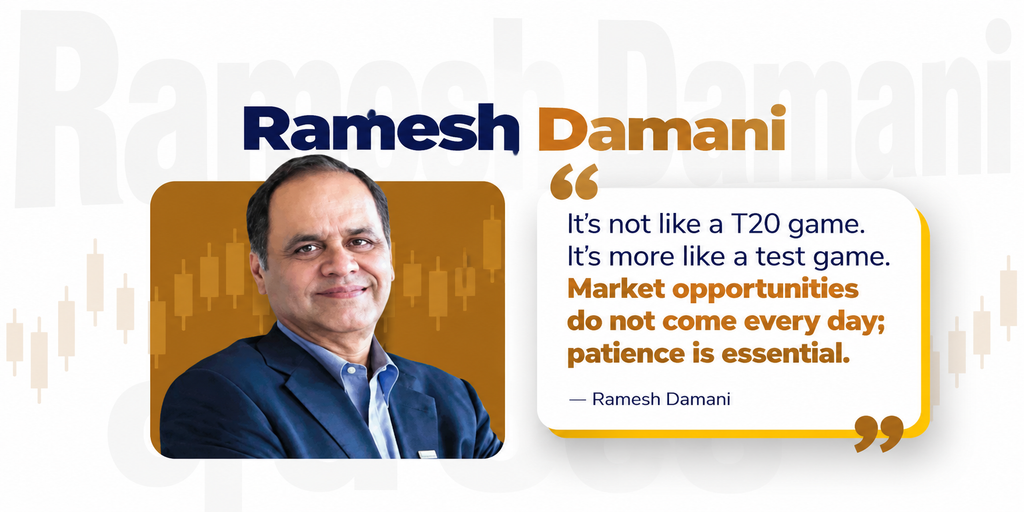
Ramesh Damani is a well-respected investor in India who has made a name for himself by investing in companies that will be winners in the long term. The key lessons he stresses are making sure you are ahead of the curve, understand market cycles and avoid making impulsive decisions.
Takeaways
- Focus on long term business trends.
- Avoid impulsive decisions.
- Learn about market cycles and how they affect your valuation.
- Be patient and wait for good opportunities.
Tip for Beginners : You don’t need to be constantly trading in the market. Sometimes it is more valuable to wait for a better opportunity.
Ashish Kacholia: Research Emerging Businesses

Ashish Kacholia (“Big Whale of Dalal Street”) is the founder of Lucky Investments. He has a knack for finding growth stories that lie in small and mid-caps. He likes to research on unknown stocks that are fundamentally improving.
Takeaways
- Find good businesses before they become popular.
- Analyze revenue growth, profit and financial health.
- Don’t put too much money in an illiquid stock.
- Look at the long term potential.
Tip for Beginners: Small companies with great growth potential can be researched. However, it is important to look into their valuations, leverage and liquidity..
Porinju Veliyath: Question Popular Opinion
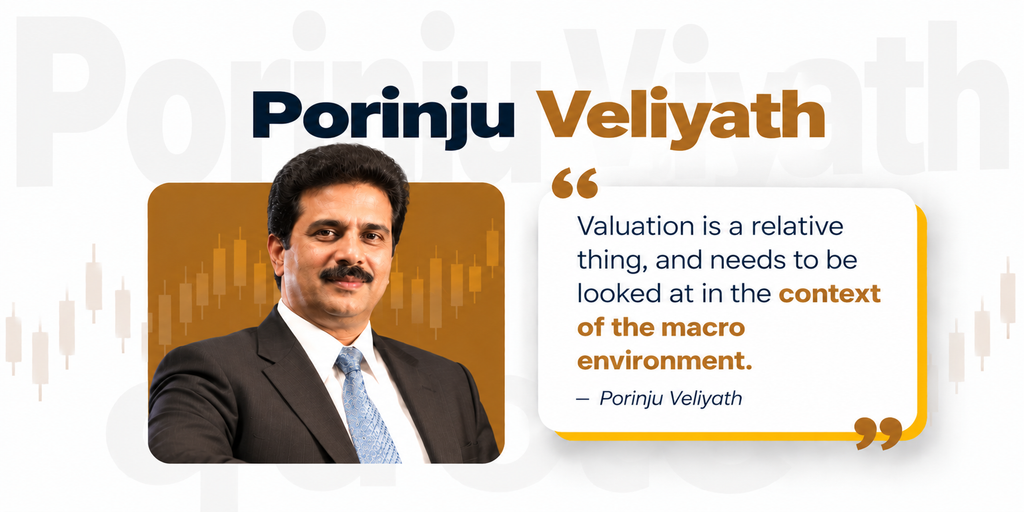
Porinju Veliyath – founder of Equity Intelligence – is well known for taking a contrarian view when investing in small-cap stocks that are trading below their intrinsic value. He invests in stocks that appear to have been ignored by investors, but have improving fundamentals or management.
Takeaways
- Invest outside of the mainstream.
- Research into companies that have real upside potential.
- Identify genuine value plays vs poor quality businesses.
- Be aware of the risks involved in going against the crowd.
Tip for Beginners: Just because a stock price is falling doesn’t mean that it is a good buy. Always make sure you know why it is falling in value.
Nemish Shah: Focus on Fundamentals
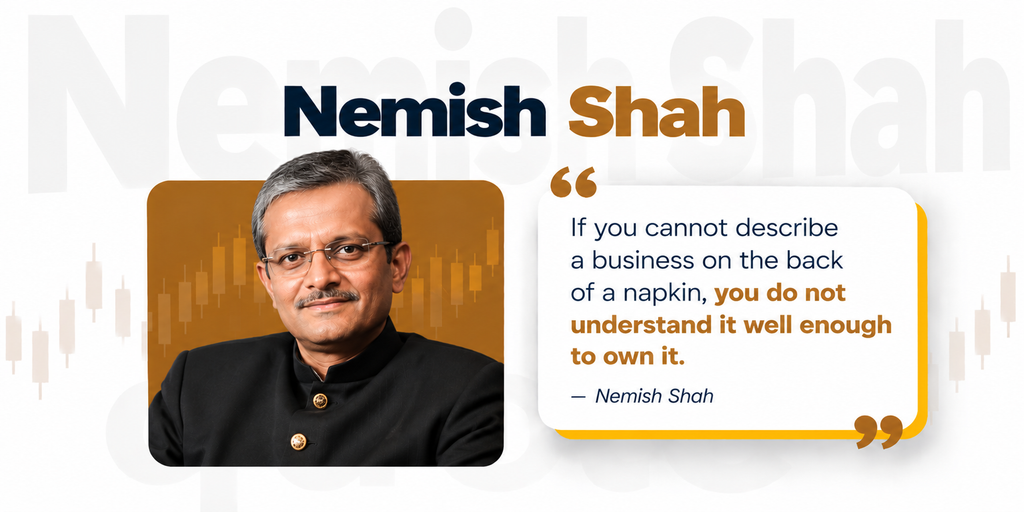
Nemish Shah – Co-Founder of ENAM Securities, is a value investor and focuses on companies with strong fundamentals.
Takeaways
- Focus on companies with strong fundamentals.
- Look for quality management with good capital allocation skills.
- Don’t invest in stocks that are overvalued.
- Focus on preserving your capital.
Tip for Beginners: Before investing look at the fundamentals of the company, how much debt they have, what their return on capital is like and whether they can generate consistent profits.
Dolly Khanna: Don’t Copy a Portfolio Blindly
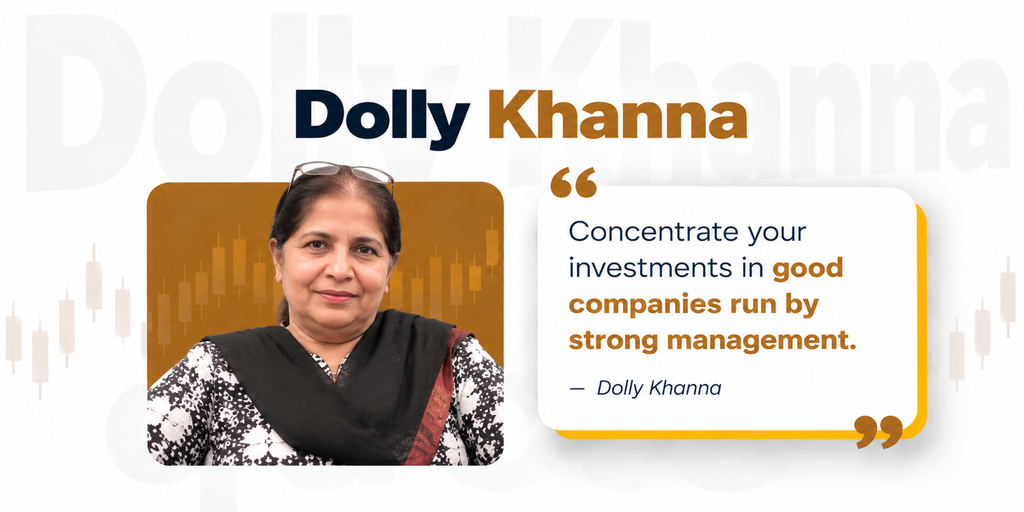
Dolly Khanna is a well known figure in the Indian stock market as her equity holdings are made public. She has made many investments into smaller companies across multiple industries. Whilst this provides some great research hints, it does not show us what her actual investing strategy is or what price she paid.
Takeaways
- Research non-popular stocks.
- Research how well the company is doing financially and any opportunities within their sector.
- Learn why diversifying your portfolio is key.
- Don’t copy what has been made public.
Tip for Beginner: If you decide to invest based on a famous investors holding then by the time it is made public the stock will likely have moved quite a bit. Always do your own research.
Ashish Dhawan: Think Beyond Short-Term Prices
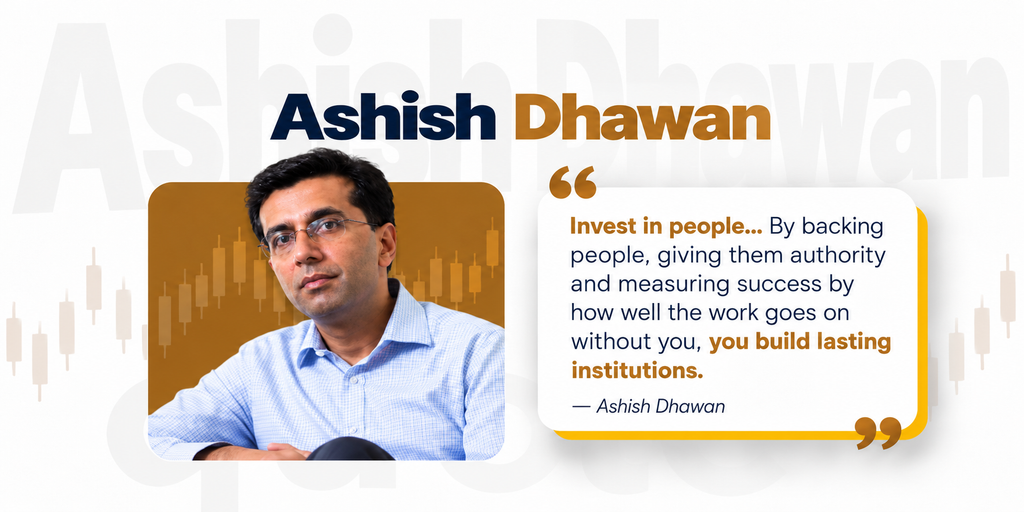
Ashish Dhawan is an influential investor in India and is a co-founder at ChrysCapital. A well-rounded private equity firm, they have experience at various stages of growth. Their strategy focuses on management quality, scalability, competitive advantage and long term capital allocation.
Takeaways
- Understand the business model and competitive advantage.
- Look at the quality of management and how well they can execute.
- Long term sustainability.
- Know the risk-reward profile.
Tip for Begineers: Investing isn’t just about finding a great company. You need to know how financially strong they are, what their valuation is, how good their leaders are and if they have long term growth potential.
Compare and Contrast Trading and Investing Styles
| Approach | Emphasis | Typical Holding Period | Key Risk |
| Intraday | Intra-day price movement | Minutes / Hours | Quick losses, overtrading |
| Swing | Short term trends | Days / Weeks | Sudden reversals |
| Positional | Longer term trends | Weeks / Months | Drawdowns |
| Growth Investing | Company growth | Months / Years | Overvalued |
| Value Investing | Price to value to company | Months / Years | Value traps |
There is not a style that would be suitable for all markets. It depends on what you know, how much time you have and your risk tolerance.
Lessons Beginners Can Learn from Top Traders in India
There are many lessons that can be taken from the top traders in India.
Many lessons can be learned from these new traders:
1. Set Your Risk
To help reduce risk:
If you plan on risking 1% in a ₹50,000 account this would equal a planned loss of ₹500. If you were to buy the shares at ₹200 and sell them at a loss at ₹195 then each share would be at risk of a ₹5 loss.
Position Size = Risk / Risk Per Share
₹500 / ₹5 = 100 shares
This is not a guaranteed exit price and will exclude any costs or slippage/gaps.
2. Avoid Revenge Trading
If you have lost ₹1,000 then you should double your next salary to make up for the loss. This can cause you to have a worse impact.
Set a daily loss limit. Don’t let emotions change your position size. Take breaks after 2 or 3 losses and see if you stuck to your rules.
3. Trading Journal
Record why you are buying/selling, price, stop loss, target, risk, expected/actual and emotions.
Make errors weekly but not for trading.
4. Know Options
Understanding options:
Time decay, volatility changes and complex payoffs.
The smaller the premium risk reduces.
Before you invest in a contract look up what it specifies. Find out its expiry date, margin requirements and payoff diagrams.
How Ruchir Gupta Training Academy Can Help
Learn from stories of successful traders but take time to build a strategy through learning and experience.
We offer stock market education and training on stock market topics. This includes market concepts, technical analysis, derivatives, options and more.
Look at the list of official Stock market courses.
A Smart Way to Learn
- Learn about orders, candlesticks, trends and market structure.
- Work on support/resistance and volume analysis.
- Understand risk reward and stop loss in position sizing.
- Understand options premium, expiry and volatility.
- Paper trade and look for any repeats or errors.
If you are looking for guided education on intraday, options and technical analysis then look at our programmes and choose one that suits your level of experience.
The goal is to give you insight. This does not guarantee returns or copying of trades.
Conclusion
The principles are key to the VeeWise system.
The top traders in the Indian market can confirm this. They have had success in the market. Key factors are research, patience, discipline and risk management.
Having a basic understanding, having a consistent strategy, limiting risk and reviewing past decisions.
If you want a structure then look at Ruchir Gupta Training Academy and pick what you can learn.
The only way to remove the risk of trading is to stop the course/strategy.
Disclaimer
Note: This is an educational resource and a buy/sell recommendation is not included. Please check course qualifications prior to attending. Investing in trading can lead to the risk of losing money invested and the past performance is not a prediction of future performance.