Suppose you spot a good stock market opportunity. However, there’s high-speed trading taking place, and you can’t get your order through quickly enough.
This is high-frequency trading (HFT). It uses powerful computers and algorithms to execute trades rapidly.
In this article, we will explain what high-frequency trading is, its advantages and risks, and what Indian traders should know.
Quick Answer: What Is High-Frequency Trading?
High Frequency Trading refers to the practice of placing a large amount of orders using fast computers. Often making use of market maker and arbitrage strategies to make money on small price movements.
How Does High-Frequency Trading Work?
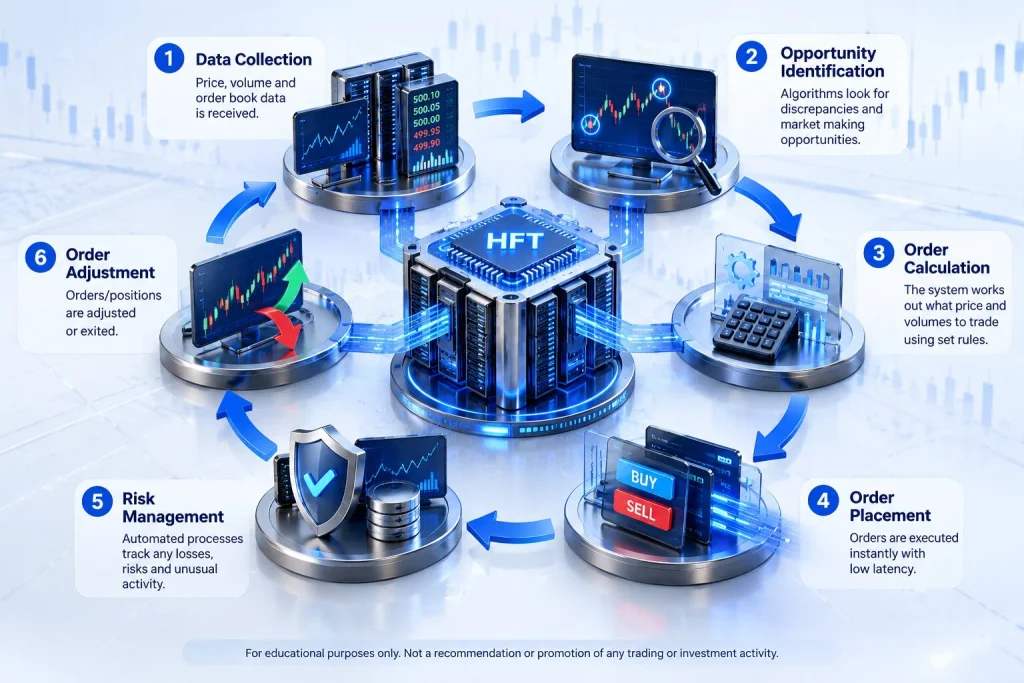
High frequency trading (HFT) takes advantage of short term opportunities using automated processes. Trades can be executed within a matter of milliseconds or even seconds.
What Is Latency in HFT?
Latency in the system is important as it refers to how quickly the data can be received, processed and executed. The lower the latency, the faster the trade can be executed, which gives traders a greater opportunity to profit.
The 6 Steps of High Frequency Trading
High frequency trading systems work using the following six steps:
- Data Collection: Price, volume and order book data is received.
- Opportunity Identification: Algorithms look for any discrepancies and market making opportunities.
- Order Calculation: The system works out what price and volumes to trade using set rules.
- Order Placement: Orders are executed instantly with low latency.
- Risk Management: Automated processes track any losses, risks and unusual activity.
- Order Adjustment: Orders/positions are adjusted or exited.
This process will be continuously repeated and is fully automated.
A Practical HFT Trading Example
Imagine this system takes advantage of the disparity in prices in the short term. For example,
| Component | Value |
| Profit per Trade | ₹100 |
| Winning Trades | 100 |
| Gross Profit | ₹10,000 |
| Brokerage Fees, Technology Charges and Other Assumed Costs | ₹4,000 |
| Net Balance | ₹6,000 |
This is calculated using the following equation:
Net Profit = Gross Profit − Costs
₹10,000-₹4,000=₹6,000
This does not account for losing trades and some costs not listed here.
Gross Profit is not the same as Net Profit. Costs, slippage and unforeseen movements can cause you to make a loss.
Advantages of High-Frequency Trading
Speed
Algorithms analyse a transaction quicker than a human would and so help firms take advantage of quick opportunities.
Liquidity
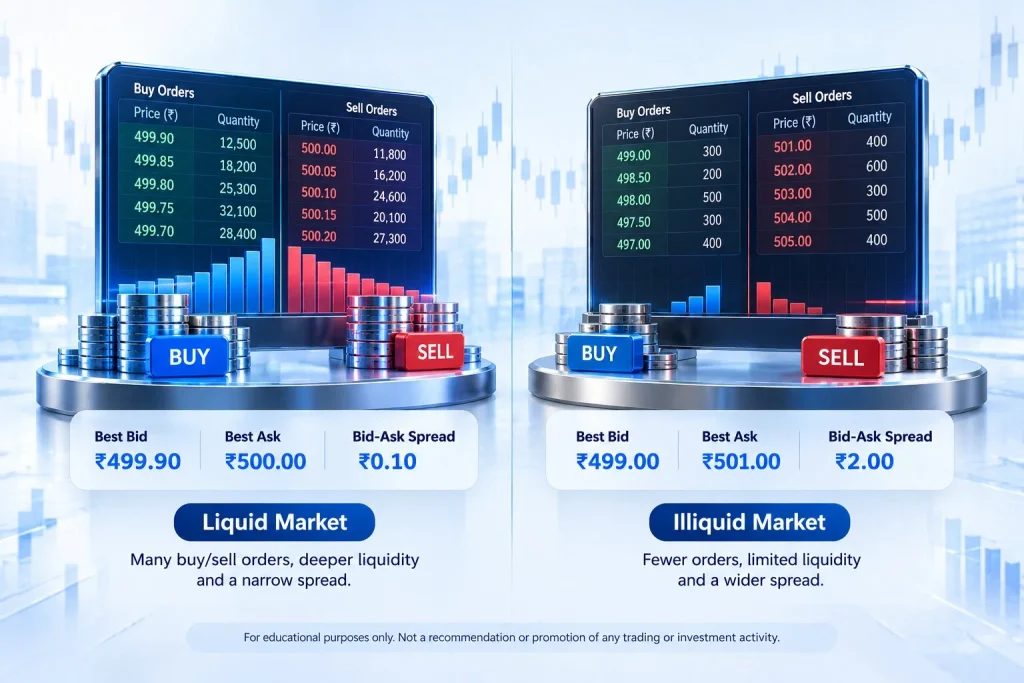
Many HFT firms operate as market makers. Providing a buy/sell price for traders which can therefore increase liquidity.
However, they may remove their price in times of volatility.
Lower Bid-Ask Spread
The difference between the best bid price and best ask price is known as the Bid-Ask Spread.
| Component | Value |
| Best Bid | ₹499.90 |
| Best Ask | ₹500.00 |
| Bid-Ask Spread | ₹0.10 |
Competition can come into play meaning this reduces. Therefore reducing the cost of trading.
Improved Price Discovery
Prices will change automatically due to new information however this can increase volatility due to fast reactions.
Algorithms Based on Rules
Algorithms will be based on set rules. Bad rules can cause the trader to lose repeatedly.
Market Maker and Arbitrage
Market maker strategies and Arbitrage Strategies are commonly seen.
– Market Maker Strategies: Aim to profit from your spread by placing buy/sell prices. This comes with risks which must be managed such as inventory and price.
– Arbitrage Strategies: Aim to profit from price disparities in related instruments. This requires accurate information, transactions and realistic costs.
Risks of High-Frequency Trading
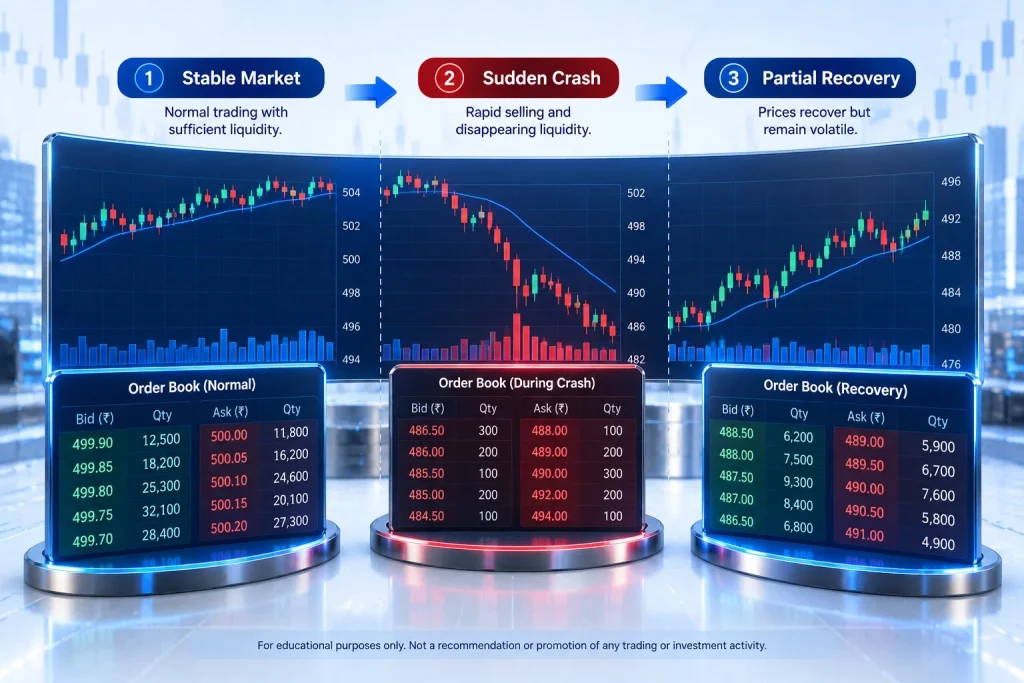
Speed can create opportunities, but it can also magnify mistakes.
| Risk | Why It Matters |
| High Infrastructure Costs | Specialised hardware, networks and market data can be expensive. |
| Technical Errors | Technology failures or software issues can lead to erroneous orders and unexpected losses. |
| Liquidity Risk | Liquidity can disappear during volatile market conditions, making trades difficult to execute. |
| High Competition | Competition between HFT firms can quickly eliminate profitable trading opportunities. |
| Price Risk | Prices may change before an order is executed, resulting in slippage or losses. |
| Overfitting | A strategy may perform well on historical data but fail in live markets due to changing conditions. |
The 2010 Flash Crash
On the 6th of May 2010, there was major market volatility called the Flash Crash. This was investigated to see how market volatility was increased by large amounts of selling, algorithmic trading and a lack of liquidity within the market.
While HFT wasn’t the only reason, it does give us a real world example of how algorithms can make a volatile market worse if there is low liquidity.
Key Takeaway: Make sure you have good market controls.
Psychological Risk
Novices may feel like they are better traders because they’re fast. This can lead to:
- Over trading
- Rash decisions
- Higher automation costs
Focus on your strategy, risk and costs as a retail trader rather than competing with HFT companies.
High-Frequency Trading vs Traditional Trading
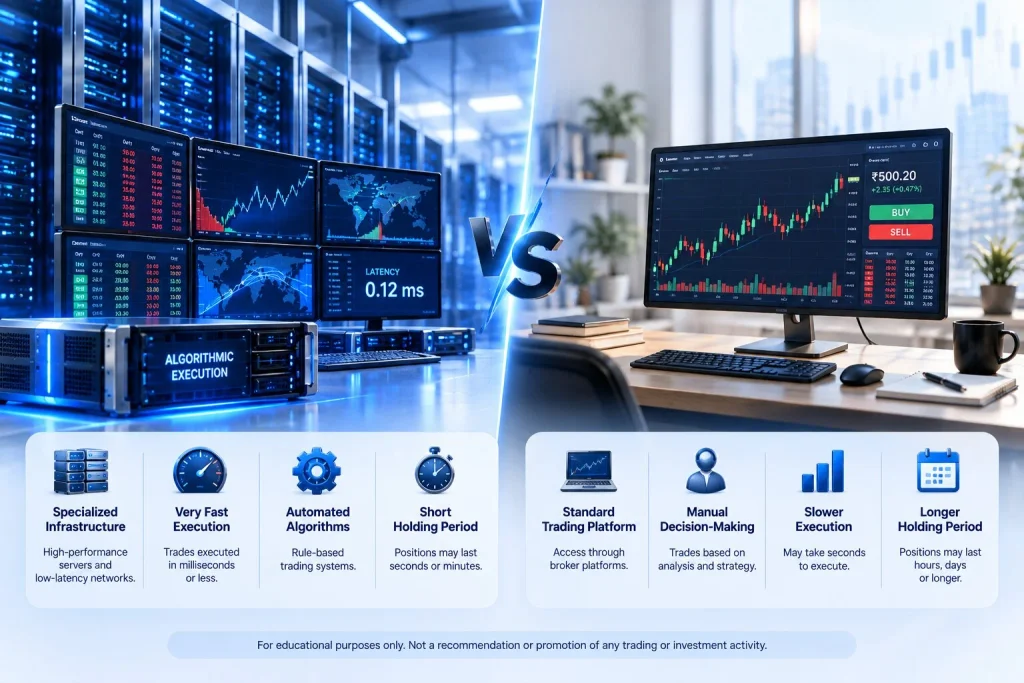
| Feature | High-Frequency Trading (HFT) | Traditional Retail Trading |
| Execution | Automated and extremely fast. | Usually executed manually or through a broker. |
| Holding Period | Often milliseconds or seconds. | Seconds to months. |
| Infrastructure | Requires specialised systems and low-latency technology. | Generally more accessible with standard trading platforms. |
| Common Strategies | Market making and arbitrage. | Intraday, swing and position trading. |
| Main Challenges | Low latency, technology requirements and execution costs. | Market analysis, trading discipline and risk management. |
Is HFT the Same as Algorithmic Trading?
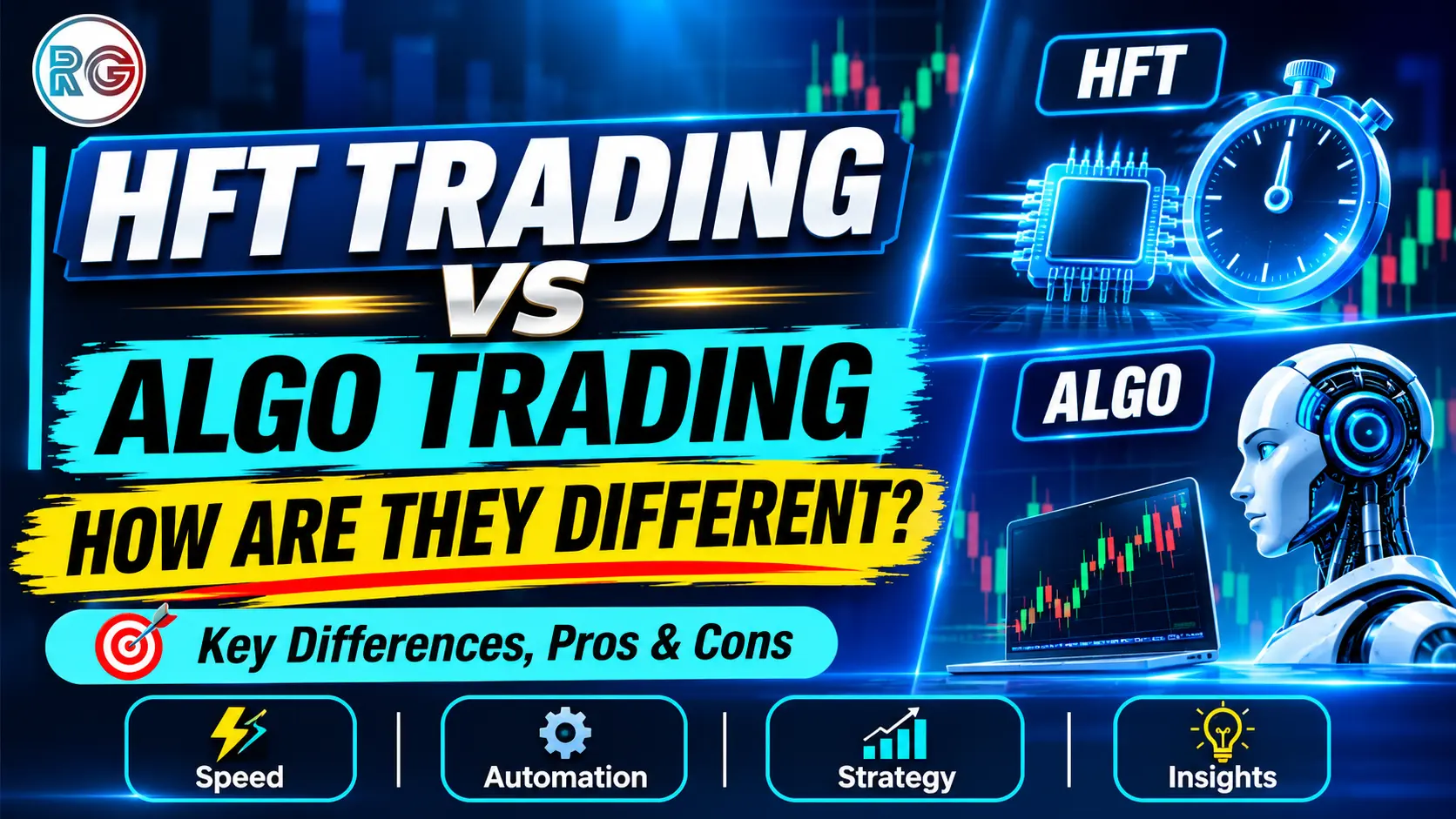
No, it is not. High frequency trading is a specific form of algorithmic trading.
Example: Algorithmic Trading
If you are using a program that can make trades when the 20-day moving average crosses over the 50-day moving average, then this is an algorithmic strategy.
However, if you only make a few trades per day then this is not considered high-frequency trading.
Key Takeaway: All high frequency trading will use algorithms but not all algorithmic trading is high-frequency.
What are the Pros and Cons of HFT in India?
Indian stock exchanges and brokers are keen on algorithmic trading. Institutional HFT, however, needs specialised infrastructure, which individual traders may not have access to.
On 4th February 2025, the SEBI circular regarding Safer Participation of Retail Investors in Algorithmic Trading was released. Be sure to follow up any changes in its implementation and requirements.
Avoid trading based on your first few trades.
Key Considerations for Retail Traders
- Know Regulations: Familiarize yourself with the rules that have been imposed by SEBI and stock exchanges.
- Check Broker Infrastructure: Make sure your broker has the appropriate infrastructure for automated trading.
- Analyze Your Trading Plan and Costs: Know your strategy and the expenses of it.
- Be Aware of Guaranteed Profit Claims: Be wary of guarantees of returns.
- Backtest and Practise: Backtest your strategy and practise using a demo account before trading with real money.
Official Sources
Important Note: Regulations can change. Always review the latest official circulars from SEBI and NSE and confirm the applicable requirements with your broker before starting automated trading.
What Can Beginners Learn from High-Frequency Trading?
You don’t need expensive tools to develop effective trading strategies. Beginners should first focus on building their knowledge of market fundamentals, risk management and trading discipline.
7 Things Every Beginner Should Learn
1. Market Understanding: Understand how orders are placed and executed in the market, along with liquidity and bid-ask spreads.
2. Technical Analysis: Learn about price action, support and resistance levels, and market trends.
3. Risk Management: Understand position sizing and how much risk you can afford to take.
4. Trading Fees: Consider brokerage, taxes, spreads and slippage.
5. Paper Trading: Backtest strategies and practise trading without risking real money.
6. Trading Journal: Keep track of your trading decisions and mistakes to identify patterns.
7. Automation: Once you understand trading fundamentals, explore programming and backtesting.
Learn to Trade the Right Way (Ruchir Gupta Trading Academy)
While understanding high-frequency trading can be beneficial, it is important to start by learning the basics of the stock market.
Understanding market behaviour, technical analysis and risk management are essential skills for beginners.
Skills You Will Learn
Courses include:
- Intraday Trading: Price Movement and market trends.
- Options Trading: Fundamentals and associated risks.
- Technical Analysis: Chart reading, Support and resistance, Technical indicators.
- Risk Management: Position sizing, stop-loss and capital protection.
- Trading Discipline: Learning to have a structured and disciplined trading strategy.
Build the Knowledge Base of Your Trading Skills
Learn about the courses provided by Ruchir Gupta Trading Academy to gain hands-on experience and discipline in trading.
Key Takeaway: Keep in mind that there is no trading system that will guarantee profits. Get to know the fundamentals of the market before developing your knowledge base.
Conclusion: Speed is Key but Knowledge is King
Although a high frequency trader can provide you with more liquidity, faster execution and effective price discovery, it can prove very expensive, competitive, prone to errors and cause volatility.
As a retail trader, it’s essential that you understand the market, analyse your strategy to ensure it is effective and manage your risk as you can, rather than try to compete with institutional traders.
Want to improve your knowledge of the stock market?
Disclaimer – The information contained within this article is for educational purposes only and should not be considered personal investment advice. Trading involves financial risk, and losses may exceed your expectations.