Learning stock trading from random YouTube videos can create a strange problem: you know dozens of indicators but still do not know what to do when the market opens.
One video teaches RSI. Another recommends moving averages. Someone else talks about options buying, while another trader says price action is all you need.
The missing part is usually structure.
Good online courses for stock market learning should take you from understanding how markets work to reading charts, managing risk and developing a repeatable decision-making process. They should also teach you what not to do.
For traders in 2026-2027, that matters because access to information is no longer the problem. Filtering that information and applying it without taking unnecessary risk is the harder skill.
This guide compares five online learning options available to Indian stock market learners, including Ruchir Gupta Training Academy, NSE/NAL Academy programs, Zerodha Varsity, NISM and Elearnmarkets.
Important: A stock market course can teach analysis and risk-management methods, but it cannot guarantee trading profits. Market outcomes remain uncertain and capital can be lost.
Quick Answer: Which Online Stock Market Courses Should You Consider?
Five online stock market learning options worth researching in 2026-2027 are Ruchir Gupta Training Academy, NSE/NAL Academy’s online market programs, Zerodha Varsity, NISM eLearning and Elearnmarkets. The right choice depends on whether you need practical mentorship, formal market education, self-paced fundamentals, certification-oriented learning or specialised trading modules.
Top 5 Online Courses for Stock Market in 2026-2027
| Course/Platform | Learning Style | Useful For | Key Focus |
| Ruchir Gupta Training Academy | Mentor-led + recorded learning | Beginners and active traders | Technical analysis, market structure, risk management, trading psychology |
| NSE/NAL Academy | Online interactive/self-paced | Students, traders and finance professionals | Technical analysis, derivatives and financial markets |
| Zerodha Varsity | Self-paced | Beginners and independent learners | Markets, fundamental analysis, technical analysis, derivatives |
| NISM eLearning | Self-paced institutional learning | Investors and finance learners | Securities markets and investor education |
| Elearnmarkets | Recorded + live programs | Beginner to advanced learners | Technical analysis, options, price action and trading strategies |
There is no single course that fits every learner. A beginner trying to understand NSE and BSE needs something different from an options trader who already understands market structure.
1. Ruchir Gupta Training Academy – Practical, Mentor-Led Market Learning
For traders who want to move beyond definitions and understand how trading concepts are applied to actual market situations, Ruchir Gupta Training Academy takes a practical, structured approach.
The academy’s current course material covers technical analysis, trading strategies, risk management and market psychology. It offers both live and recorded learning and describes a learning path extending from basic concepts to more advanced trading methods.
Ruchir Gupta’s academy material also emphasises discipline, capital protection and reducing emotional decision-making rather than simply searching for trading calls.
What can students learn?
Depending on the selected program, learners can study areas such as:
- Stock market fundamentals
- Technical analysis
- Market structure
- Price and time analysis
- Risk and capital management
- Trading psychology
- Options basics
- Scanner-based market analysis
- Trading systems
- Indian stock-market applications
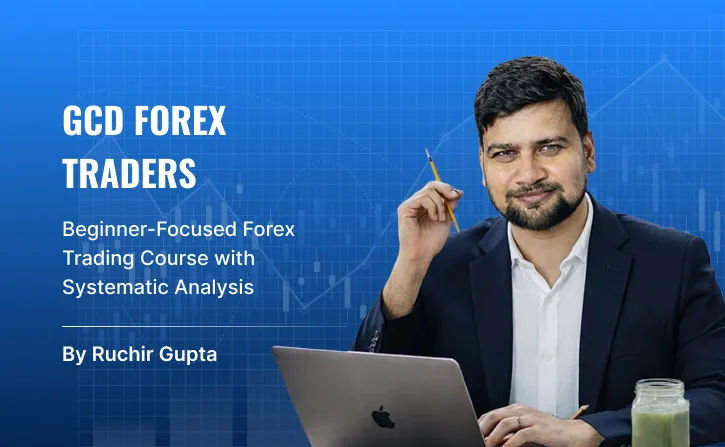
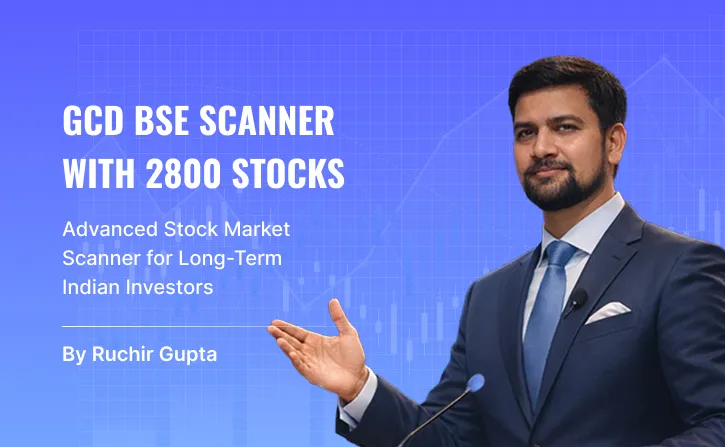
The current GCD Indian Stock Scanner course, for example, is listed as a 150+ hour online program with one-year access and Hindi + English instruction. Its course page describes the program as covering Indian markets through market structure, time-cycle concepts and options basics.
Why practical training matters
Consider a beginner who sees a bullish breakout.
The inexperienced response may be:
“The stock has broken resistance. I should buy.”
A disciplined trader has more questions:
- Where is the invalidation level?
- What is the potential risk?
- Is volume supporting the move?
- Am I entering after the price has already extended?
- How much capital should I risk?
- What happens if the trade immediately moves against me?
This is where structured learning becomes more useful than memorising chart patterns.
A trader does not need 20 indicators on a screen. The trader needs a method for deciding when to trade, how much to risk and when the original idea is no longer valid.
Who should consider Ruchir Gupta Training Academy?
It may suit:
- Beginners who need a structured learning path.
- Traders who understand basic terminology but struggle with application.
- Learners who prefer mentor-led education.
- Traders interested in technical and scanner-based analysis.
- People who want trading psychology and risk management included in their learning.
The academy states that its online programs include live sessions, recorded lessons, practical assignments and mentor support.
CTA: Join a stock market course by Ruchir Gupta to learn intraday trading, options concepts, technical analysis, risk management and structured market analysis through practical training and mentorship.
2. NSE/NAL Academy Online Stock Market Programs
NSE India provides a large catalogue of financial-market education programs through its learning ecosystem.
As of August 2026, its online offerings include technical analysis, advanced technical analysis, fundamental analysis, options strategies, futures and options, index trading, algorithmic trading and other market subjects.
For example, its Technical Analysis Essentials program is listed as a 12-hour online interactive course covering:
- Dow Theory
- Support and resistance
- Japanese candlesticks
- Heikin-Ashi
- Moving averages
- RSI
- Bollinger Bands
- Swing trading
- Money management
- Order placement
This makes exchange-linked educational programs useful for people who want a more formal curriculum.
Who is it suitable for?
NSE’s programs can make sense for:
- Students
- Investors
- Retail traders
- Finance professionals
- Dealers and sub-brokers
- People seeking structured technical-analysis education
Its more extensive Technical Analysis and Chart Patterns blended program combines 20+ hours of self-paced learning with 12 live interactive sessions and covers price action, volume, Fibonacci, scanners, swing trading and index trading.
3. Zerodha Varsity – Strong Free Starting Point
If your budget is zero and you are willing to learn independently, Zerodha Varsity provides a substantial free stock-market education library.
Varsity is openly accessible without a paywall and includes modules, videos, quizzes and tests.
Its modules cover:
- Introduction to stock markets
- Technical analysis
- Fundamental analysis
- Futures
- Options
- Option strategies
- Markets and taxation
- Currency and commodities
- Risk management
- Trading psychology
- Trading systems
- Personal finance
Where does Varsity fit?
Varsity works particularly well when you want to answer questions such as:
What exactly is an option?
How do futures contracts work?
What is technical analysis?
How do financial statements help investors?
Why does position sizing matter?
The main difference is learning style. Reading comprehensive educational material independently is different from working with a mentor who can examine how you are applying a concept.
That makes Varsity a useful foundation even for someone who later joins an online trading course.
4. NISM eLearning – Securities-Market Education
National Institute of Securities Markets (NISM) is another important resource for Indian securities-market learners.
NISM offers certifications, self-paced eLearning, academic programs, training and investor-education initiatives. Its current online portal includes both free and paid courses.
For beginners, this type of education is particularly useful for understanding the structure surrounding financial markets rather than jumping immediately into strategies.
NISM can be useful if you want to understand:
- Securities markets
- Investor education
- Market regulations
- Financial products
- Professional securities-market concepts
- Industry-oriented certifications
There is an important lesson here for new traders.
Learning a candlestick setup is easy. Understanding the market in which that setup exists takes longer.
A trader should know what an exchange does, how orders work, why liquidity matters, what derivatives represent and what risks are involved before increasing trading size.
5. Elearnmarkets – Wide Range of Trading Subjects
Elearnmarkets offers courses covering technical analysis, options trading, derivatives and other areas of financial markets.
Its current catalogue includes beginner programs as well as specialised courses on price action, momentum strategies and options. Its Stock Trading 101 program, for example, is presented as a 30-day beginner course covering areas such as charts, order types, risk basics and market structure.
Other programs go deeper into:
- Price action
- Momentum trading
- Swing trading
- Options strategies
- Position sizing
- Commodities
- Technical analysis
- Trading psychology
This variety can be useful when you already know the specific skill you want to develop.
How Do You Choose the Right Online Trading Course?
Do not choose share trading courses online simply because the sales page displays profitable charts.
Ask these questions first.
1. Does it teach risk before profits?
Suppose you have ₹1,00,000 of trading capital.
A strategy claiming attractive returns is irrelevant if you have no rule controlling how much of that ₹1 lakh can be lost on one trade.
Risk management should cover concepts such as:
- Position sizing
- Stop-loss planning
- Risk-reward
- Maximum acceptable loss
- Drawdowns
- Overtrading
- Leverage
2. Does it explain why a setup works?
Avoid memorising:
RSI below 30 = buy.
Markets are more complicated.
An oversold stock can remain oversold and continue falling. Indicators need context such as trend, volatility, price structure and risk.
3. Is there practical market application?
A course should bridge the gap between:
“This is a support level.”
and:
“This is how I would plan a trade around this support level while defining the risk before entry.”
That difference is enormous.
4. Does it teach trading psychology?
One of the hardest lessons usually arrives after a few successful trades.
Confidence can turn into overconfidence.
A trader makes ₹8,000, then increases position size aggressively because the next setup “looks obvious.” One bad trade wipes out several earlier gains.
Trading psychology is therefore connected directly to risk management.
5. Does the learning format suit you?
| If you need… | Consider this type of learning |
| Practical mentorship | Mentor-led trading academy |
| Formal exchange-linked education | NSE/NAL Academy programs |
| Free self-study | Zerodha Varsity |
| Securities-market education | NISM |
| Specialised individual modules | Elearnmarkets |
What Should Beginners Learn First?
A sensible learning sequence is:
- Understand how Indian stock markets work.
- Learn order types and trade execution.
- Understand charts and market structure.
- Study support, resistance and trends.
- Learn technical indicators without depending entirely on them.
- Understand position sizing and stop losses.
- Study trading psychology.
- Practise using historical charts.
- Maintain a trading journal.
- Risk real capital only after understanding the downside.
This is also why searching only for the best online stock trading courses in India can be misleading. The right question is:
What course teaches the skills I currently lack?
Beginner Mistakes a Course Should Help You Avoid
A serious online trading course should address common behavioural mistakes such as:
- Trading without a predefined stop
- Increasing quantity after a loss
- Taking tips without independent analysis
- Using too many indicators
- Switching strategy after two losing trades
- Buying options without understanding time decay
- Risking too much capital on one setup
- Confusing a profitable trade with a good trading decision
- Expecting every market condition to suit the same strategy
One of the most useful mindset changes is understanding that a good trade can lose money and a bad trade can make money.
If you followed a tested process, controlled risk and accepted a planned loss, the trade may still have been correctly executed.
If you ignored every rule and made money because the market moved in your favour, that does not make the decision sound.
That distinction separates process-driven trading from gambling.
Why Ruchir Gupta Training Academy Focuses on Discipline
At Ruchir Gupta Training Academy, the learning approach is built around structured analysis rather than random market calls.
Ruchir Gupta’s academy material describes an approach focused on eliminating emotional trading, building disciplined habits and using structured risk management. It also lists areas including Gann theory and time-cycle logic, capital protection, stock selection, scanner-based filtering and rule-based trading systems.
That philosophy can be reduced to four practical ideas:
- Discipline over emotion
- Systems over speculation
- Risk management over overconfidence
- Consistency over shortcuts
The objective should not be to make a beginner dependent on a mentor forever. Good education should gradually make the learner capable of analysing a market independently.
What Should You Do Before Joining a Stock Market Course?
Do not enrol because someone displays screenshots of profitable trades.
Check the curriculum. Understand who teaches the course. Find out whether risk management is covered. See whether the learning format fits your experience level.
Most importantly, decide what you actually need.
If you need basic theory, start with educational resources.
If you need certification-oriented market education, examine institutional programs.
If you already know the definitions but struggle to turn charts, risk rules and trading concepts into a repeatable process, practical mentorship becomes more relevant.
Ruchir Gupta Training Academy is designed around this practical side of market education, with training across technical analysis, structured trading methods, risk management and market psychology.
Join a stock market course by Ruchir Gupta to learn intraday trading, options trading concepts and technical analysis through structured training and mentorship.
Trading is ultimately a decision-making skill. A course can give you frameworks, tools and guidance. What happens after that depends on how consistently you practise, manage risk and follow your process.
Disclaimer: Stock-market trading and derivatives involve financial risk. Educational courses do not guarantee profits or prevent losses. Course details, fees, access periods and curricula may change; verify current information with the respective provider before enrolling.